THE END, FIRST REHEALSAL
Goran Bertok: The End, First Rehearsal
It began with a question from the magazine Maska: What project will you realise in 2023?
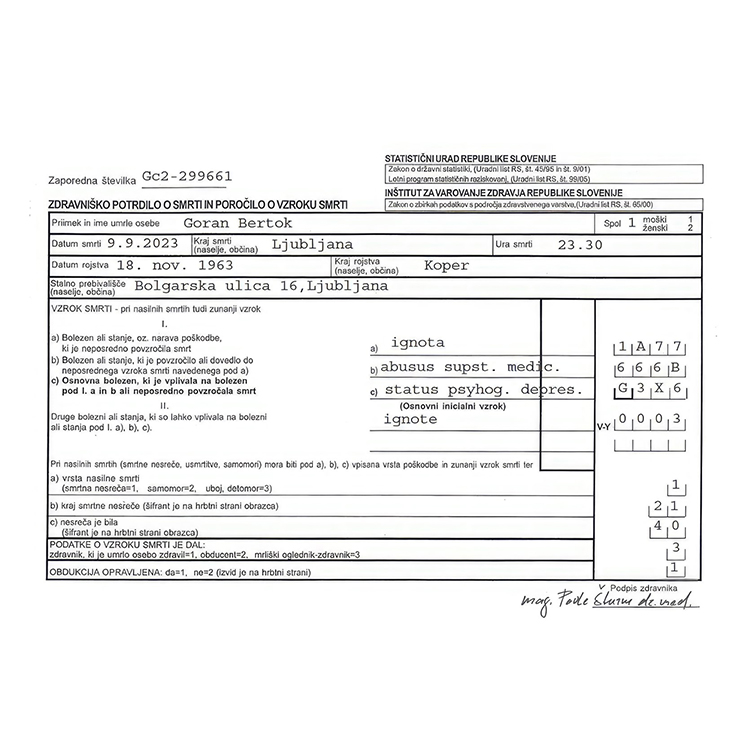
At the time, in 2006, the year 2023 lay in some distant future, and the choice of project was an easy one. I will die. A completed death certificate followed: 9 September 2023.
Seventeen years have passed, then another two weeks and a few days, and I am still alive. The statement regarding the date of my death is both a stance and a kind of joke. But this does not apply to my friends, acquaintances, and colleagues who, in the meantime, have actually departed, died. All more or less suddenly, all too soon.
Maks Soršak, Damir Domitrović, Dušan Merklin, Eleonora Marendič, Sašo Cerovac, Dejan Prša, Aleksandra Kostić, Matjaž Vidali, Igor Naglič, Blaž Horvat—he too is dead.
And others.
After them, only ash remained, a few charred bones.
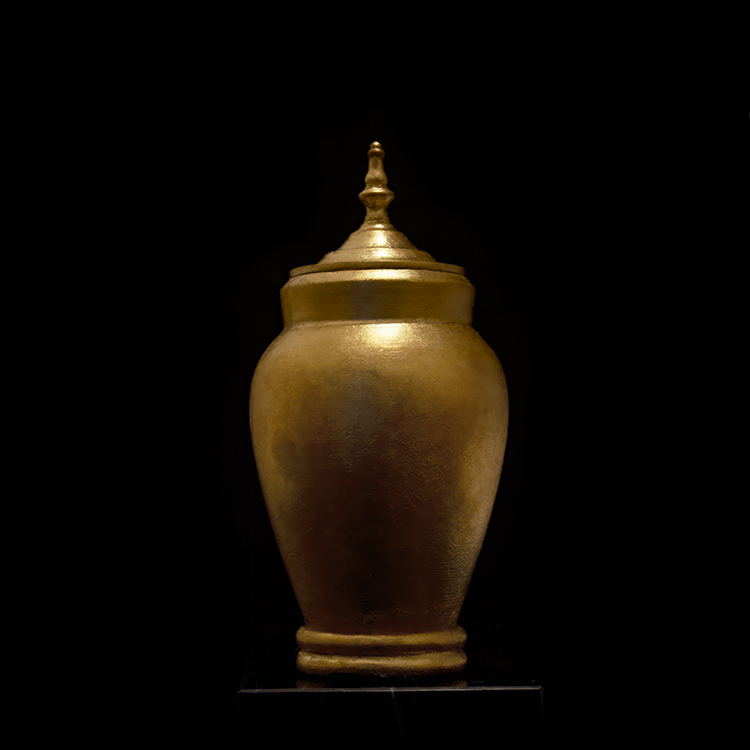
In the urn in front of you are my ashes. I am in the urn and yet alive, alive and already partly in the urn. That much.
The End, First Rehearsal.
See you at the next rehearsal!
Kaja Kraner: The End, First Rehealsal
What is the time of death, when dying is regarded as a performance? To begin with, death as such could be considered as having (at least) a double temporality: one belonging to the biological and the other to the social order. Social death depends on the incorporation of the biological order in the social order and discourse and, as such, also becomes situated in history. Biological death must be identified, recognised and declared; it must acquire its space and time through a performative action. A performance as a tool of operation and change of the current state of affairs through the act of naming is mostly about changing the relationship between the interlocutors and, in order to be successful, presupposes an authority (an official with the power to declare a death and sign a death certificate) and recognition from the addressee.
Read more ...